
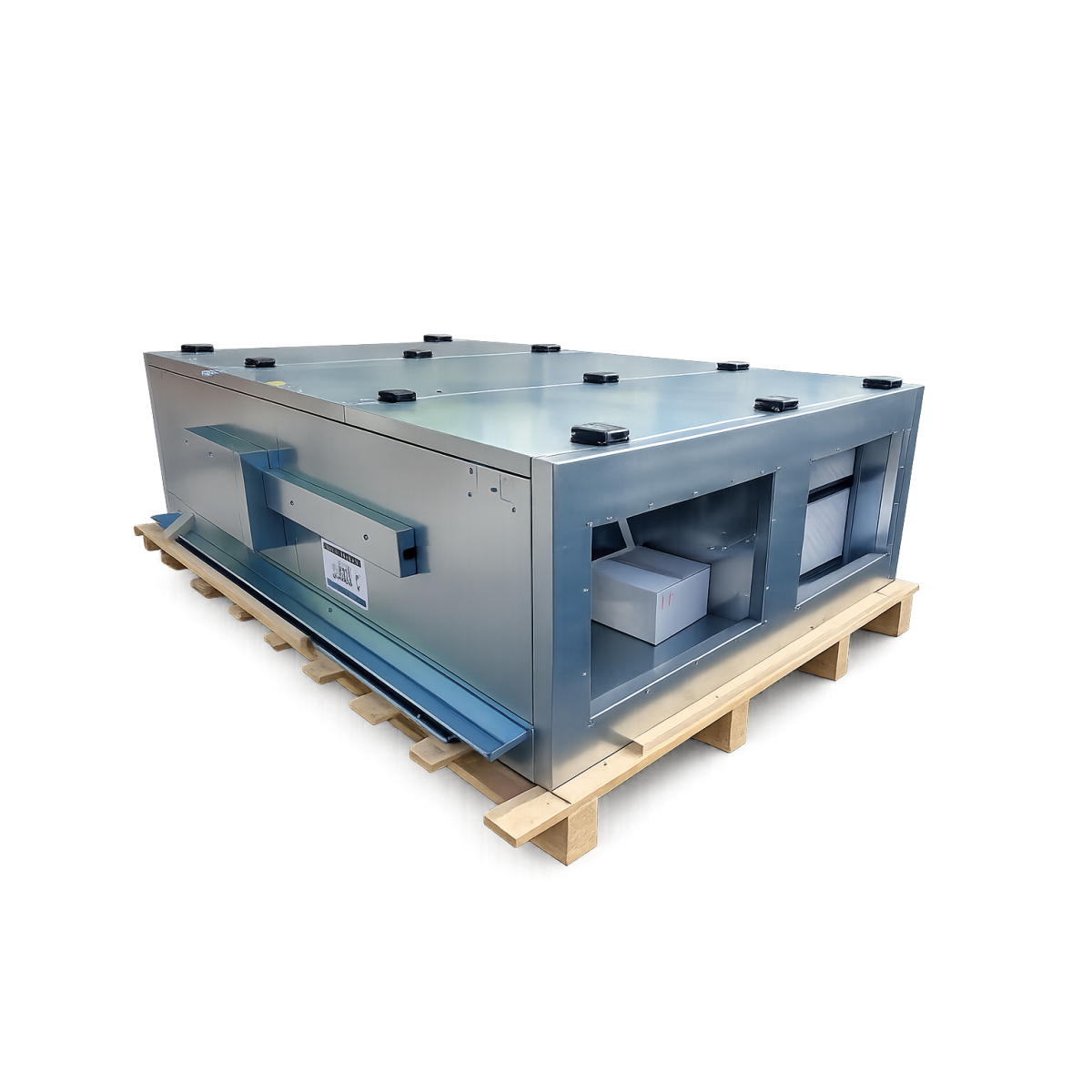
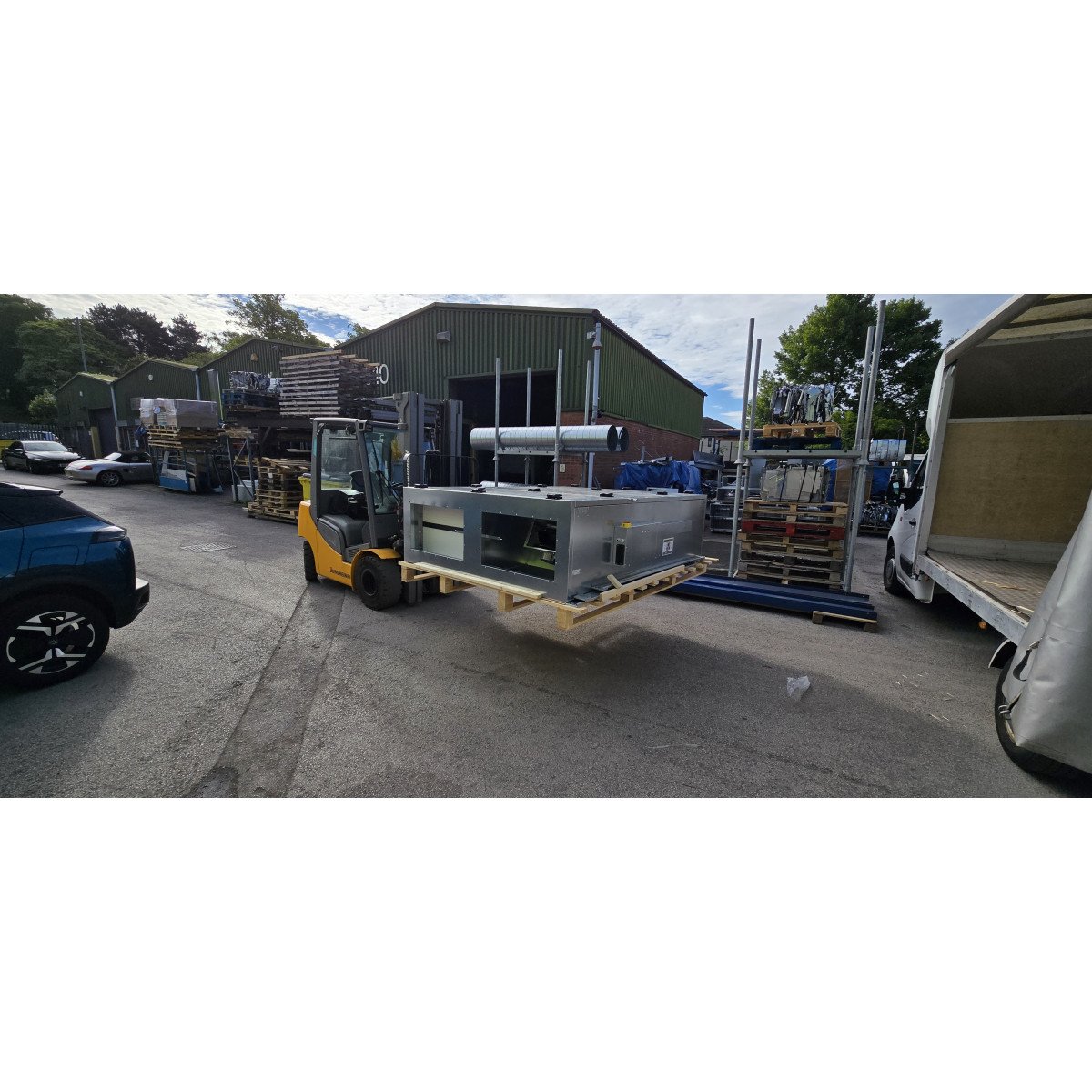


Heat Recovery Air Handling Units
Our heat recovery air handling units are designed to provide controlled fresh air ventilation while helping reduce heating energy losses. Each unit combines supply and extract air movement, filtration, heat recovery, controls and optional heating into one compact, professional ventilation package.
Rather than simply extracting warm indoor air and replacing it with cold outside air, the integrated counter-flow heat exchanger helps transfer useful heat from the outgoing air stream into the incoming fresh air supply. This can reduce the amount of additional heating required, improve comfort levels and help lower running costs.
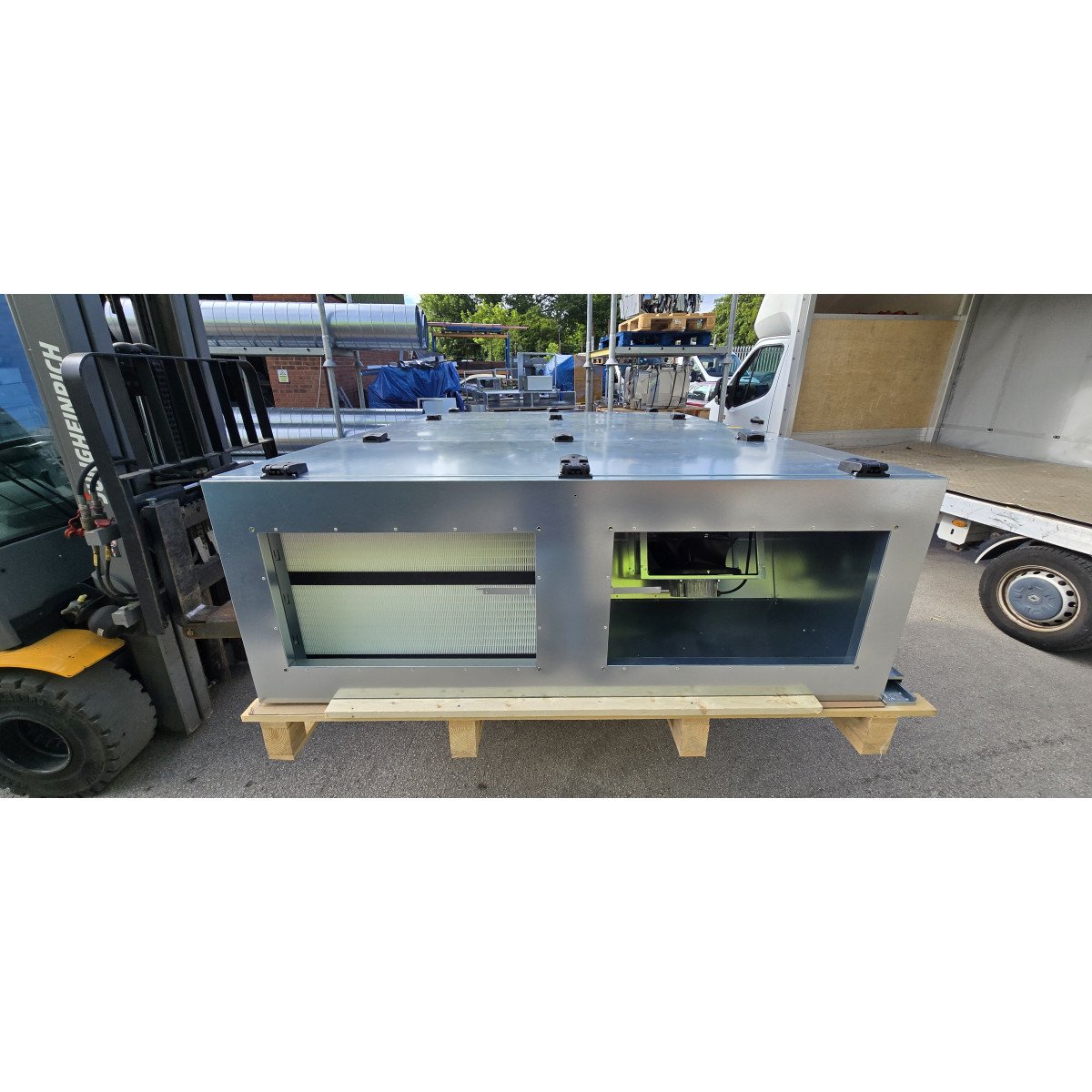
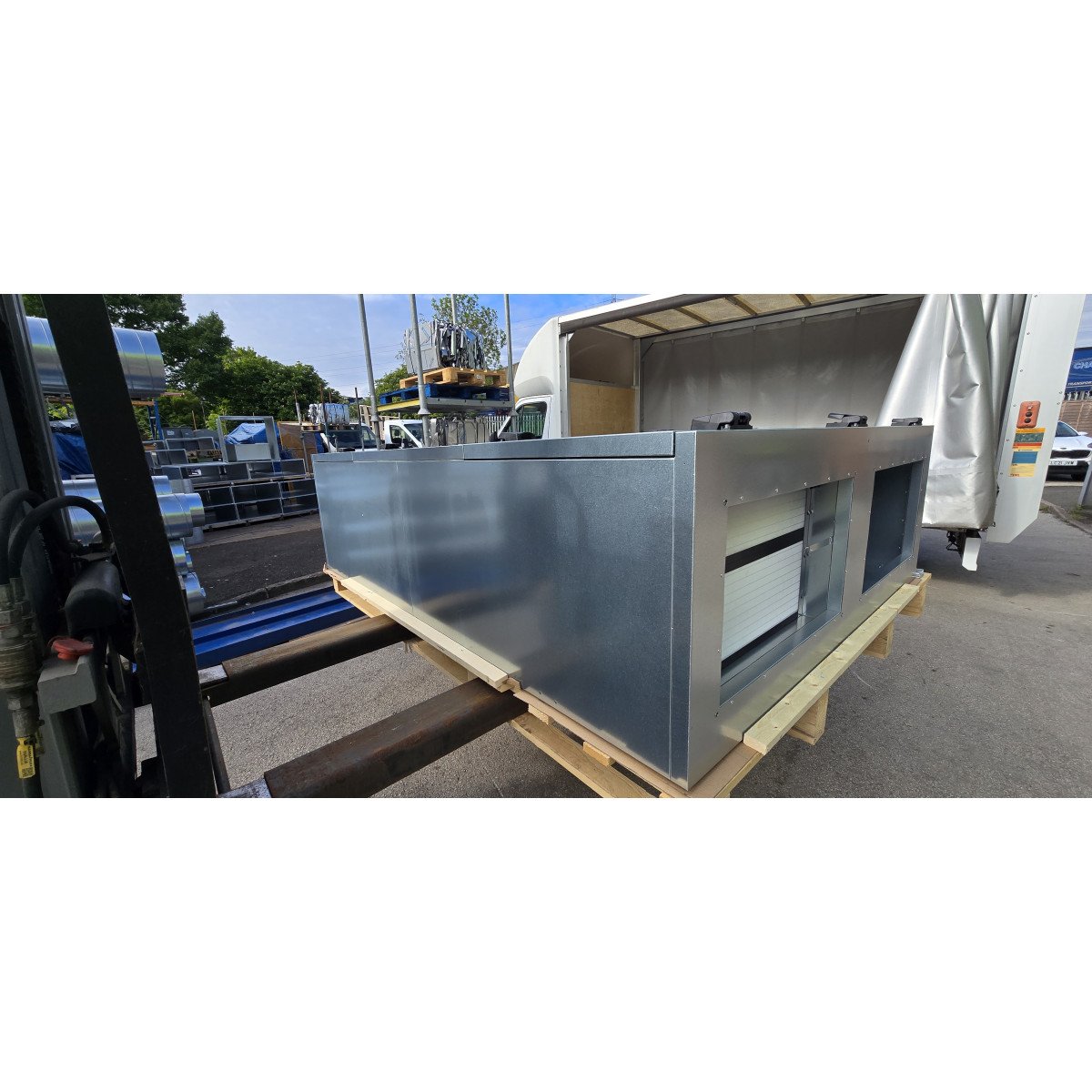
The unit includes EC fans, removable panel filters, integrated control electronics, a remote controller, main isolator and insulated galvanised steel casing. The manufacturer’s documentation confirms the units are supplied with ISO ePM10 / M5 and ISO ePM1 / F7 panel filters, counter cross-flow heat exchanger, EC fans, bypass damper and either electric or hot water heating depending on version.
Main benefits
Lower heating costs
Heat recovery reduces the amount of heat wasted through ventilation. This is especially useful in commercial premises where fresh air is required for long periods each day.
Better indoor comfort
Incoming air is tempered before entering the building, reducing cold draughts and helping maintain a more stable internal temperature.
Filtered fresh air supply
The unit includes removable panel filters on both the supply and extract side, helping protect the heat exchanger and improve the quality of air supplied into the space.
Efficient EC fan technology
EC fans offer efficient speed control and can help reduce electrical running costs compared with older fixed-speed ventilation systems.
Demand-controlled ventilation ready
The controls can work with external sensors for demand-based ventilation, allowing the system to respond to real building use rather than running flat out all day. The manual notes that the control system can operate with external sensors for demand-based ventilation.
Professional installation package
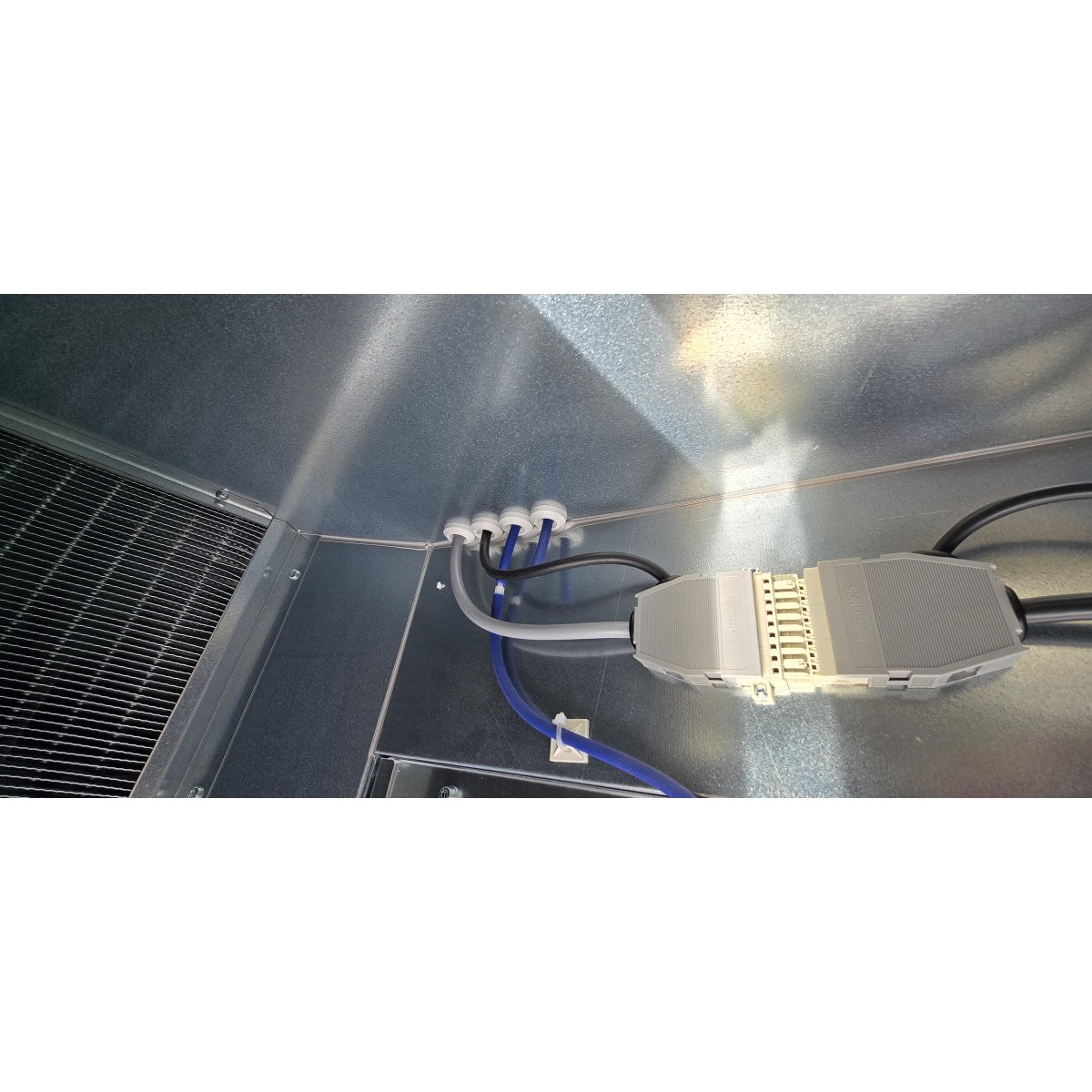
The unit is supplied with installed controls, remote control, control cable, main isolator and access panels for service and maintenance.
Trusted technical backup
Available documentation includes installation and maintenance instructions, EC declarations, commissioning report, call-to-tender information, dimensioned drawings, DWG, DXF and STEP files.
Configuration options
1. Airflow size
Units are available across a range of airflow duties, making them suitable for small commercial spaces through to larger ventilation projects.
Typical model range:
| Model size | Approx. max airflow range |
|---|---|
| HREC 700 | up to approx. 870 m³/hr |
| HREC 1300 | up to approx. 1,450–1,500 m³/hr |
| HREC 1700 | up to approx. 1,985–2,060 m³/hr |
| HREC 2500 | up to approx. 2,975–3,030 m³/hr |
| HREC 2800 | up to approx. 3,480–3,510 m³/hr |
| HREC 3500 | up to approx. 4,450 m³/hr |
Final selection should be based on required airflow, duct resistance, noise limits, installation space and heating/cooling requirements.
2. Heating options
Choose the heating arrangement to suit the project:
| Option | Best suited for |
|---|---|
| No heater / ventilation only | Projects where the heat recovery output is sufficient or heating is handled separately |
| Electric heater | Simple installation where electrical supply capacity is available |
| LPHW / hot water coil | Sites with boiler, heat pump or central heating plant |
| External heater option | Projects needing separate heating battery control or higher-duty heating |
The manual confirms versions are available with either hot water coil or electrical heating coil depending on type.
3. Controls and sensors
Available control options can include:
| Control option | Benefit |
|---|---|
| Remote controller | Simple user adjustment and system visibility |
| Constant volume control | Maintains designed ventilation rate |
| External 0–10 V input | Allows connection to sensors or BMS control |
| Pressure sensor control | Useful for constant pressure ventilation systems |
| Demand-control sensors | Can reduce fan speed when occupancy or demand is low |
| Modbus RTU interface | Suitable for BMS integration and monitoring |
The documentation refers to external 0–10 V input, external pressure sensors and Modbus RTU interface options.
4. Filter configuration
Standard filtration includes:
| Location | Filter type |
|---|---|
| Extract air | ISO ePM10 / M5 panel filter |
| Supply air | ISO ePM1 / F7 panel filter |
This protects the heat exchanger, helps maintain performance and gives the end user a simple serviceable filter arrangement.
5. Handing and duct connections
Units are available in different handed configurations to suit duct routes and site layouts. Duct connection sizes vary by model, including sizes such as 200 × 300 mm, 300 × 500 mm, 300 × 700 mm, 350 × 700 mm and 400 × 700 mm depending on unit size.
6. Installation options
The units are designed for indoor installation and ceiling mounting. They should be installed with proper maintenance access, condensate drainage, duct insulation where required, correctly sized ductwork and suitable acoustic isolation.
Important: these units should not be sold as raw greasy kitchen extract units. The manufacturer states the units are for comfort ventilation and lists greasy or very moist media as improper use
Cost-savings
Ventilation is necessary, but wasting heated air is expensive. A heat recovery AHU helps recover useful heat from the extract air and transfers it into the incoming fresh air supply.
As a simple guide:
1,000 m³/hr of air with a 10°C temperature rise is worth about 3.35 kW of heating.
So, for a 2,500 m³/hr system:
2,500 m³/hr × 10°C = approx. 8.4 kW of recovered heat value
At £0.30 per kWh, that is:
8.4 kW × £0.30 = approx. £2.52 per running hour
Over 2,000 heating hours per year:
£2.52 × 2,000 hours = approx. £5,040 per year of heating value
Actual savings depend on site conditions, airflow, internal temperature, outside temperature, heating fuel type, control settings and how many hours the system runs.
Every hour your building extracts warm air, you may be paying to throw heat away. A heat recovery air handling unit helps reclaim that energy, temper incoming fresh air and reduce the load on your heating system.
CE / UKCA marked equipment
Manufacturer documentation identifies CE and UKCA marking on the product nameplate.
EC fan technology
Supplied with two EC fans for efficient air movement and controllable operation.
Integrated heat recovery
Counter cross-flow heat exchanger included as standard.
Serviceable filters
Removable ISO ePM10 / M5 and ISO ePM1 / F7 panel filters.
Ready-to-control package
Controller installed, wired and supplied with remote control and cable.
Commissioning and maintenance record
The manufacturer notes that warranty claims require a commissioning report and maintenance record, which is a good trust signal because it shows a proper professional process.
Fresh air without throwing heat away.
Our heat recovery air handling units help commercial buildings bring in clean, filtered fresh air while reclaiming useful heat from the air being extracted. That means better comfort, less wasted energy and a more controlled indoor environment.
With EC fans, integrated controls, removable filters, insulated casing and optional electric or hot water heating, these units are a professional solution for offices, retail, hospitality, education, workshops and commercial buildings where reliable ventilation matters.